Nuit de Tokyo reports:
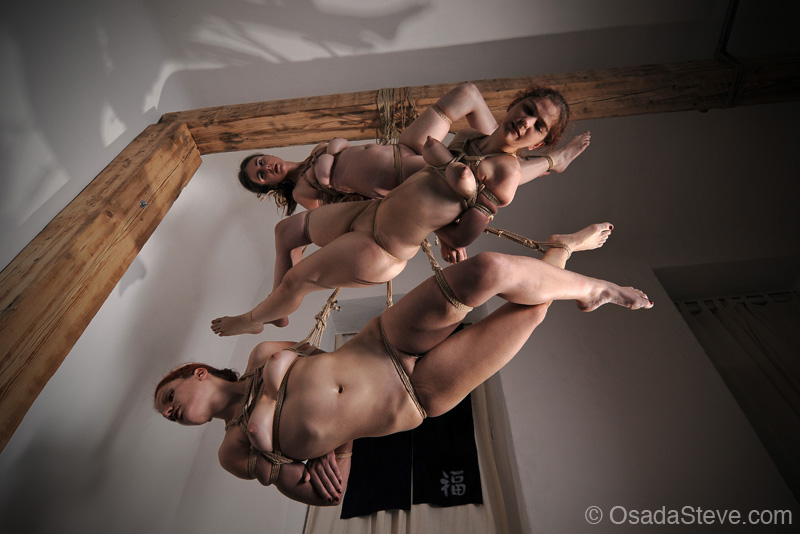
As you know, Osada Steve (長田スティーブ) has been putting on a string of bashes to celebrate the 10th anniversary(10周年) of Studio SIX Tokyo.
I missed out on the $2k/person luxury yacht cruise - billed as “beyond the 3-mile zone, feel free as you please (or get pleased)”. This event had one AV actress per VIP on board, and from what I hear there was plenty of pleasing going down on the high seas.
What I did manage to attend was part of the Golden Week “Studio SIX Platinum Razzmatazz” on the Izu Peninsular. “Golden Week” is a weeklong holiday in Japan, usually scheduled in May, where everyone leaves town. Read: the country folks come to Tokyo, and Tokyoites visit the countryside. Since forecasters have no way of knowing who might be going where, highways are usually clogged in any and all directions - so most Japanese spend most of their precious vacation time moving from one traffic jam to another.
The Izu event was set up for Studio SIX Jorensan (常連さん - honorable regular clients). It involved a three-night stay at a luxury resort (aka a playground for wealthy Japanese, a VIP hot spring or “onsen” as they call it), featuring non-stop kinbaku (緊縛) photo and video shoots. I don’t know about the cost involved per Jorensan, as I just dropped by for a day after logging a thousand miles on my bike touring the countryside.
On the day of my arrival, there were the Jorensan plus Mr Wang from China (he who shot many of the photos in the Aiko book). From what I hear, this book has become so popular that it is now in its third print, with a German-language version in the works.
A local fixer guided us to two different abandoned compounds (廃墟 - haikyo). The first one was a deserted chemical plant. In order not to attract attention - and for lack of keys to the front gate - a detour on foot through thick underbrush was necessary. After dodging fences and barbed wire we made our entry and commenced shooting.
Did I say chemical plant? Some areas looked like an outtake from Biohazard, The Movie. There were pools with sulfuric acid (H2SO4) - and plenty of tanks and basins filled with caustic liquids of all sorts. The voluptuous model brought along for the trip was put through several rope ordeals, and I’m sure that in the back of her mind were these puddles, hoppers, and traps that could lead to grief should she become unwilling to cooperate.
After several hours of severe and strict bondage, we went back the same way we came - dodging barbed wire, fences, and ravines once more - to move on to yet another abandoned (read: dilapidated) location, this time an old saw mill that had seen better days.
The local fixer was quite paranoid that a convoy of cars with Tokyo license plates plus an ayashi gaijin (怪しい外人, suspicious foreigner) on a monster bike would cause concern among the local populace. He had wisely brought walky-talky kind of gadgets (one for each vehicle), all programmed to the same frequency, and he continually and cunningly spread the convoy thin by radio instructions as to reach the destination without raising alarm from farmers or private guards hired to secure the perimeter and watch out for unwanted intruders.
Upon arrival in close approximation to the saw mill, we were instructed to “spread out” (park our vehicles in different places) and cover our license plates with rugs and foliage.
Everybody made it safely back to the warmth of the hot spring later that night. There followed a few more hours of kinbaku and photo ops in the tatami rooms before the lights went out. An hour later you could find Osada Steve soaking in the roten buro (露天風呂 - outdoor bath) gazing at the stars, plotting his next move.
NuitdeTokyo reports on the latest Sugiura Norio (杉浦則夫) photo shoot.
In Japan, pawn shops are known as ‘shichiya‘ (質屋). Due to kanji homonyms, however, the word can also be read as ‘7-8′. Predictably enough, ‘going to the 7-8′ was once upon a time slang for going to the pawn broker.
Given that pawn shops are typically refuge to an array of wealth and treasures, they used to be built around a robust ‘kura‘ (倉), a large concrete vault which not only discouraged burglary but was also resistant to earthquakes and fire.
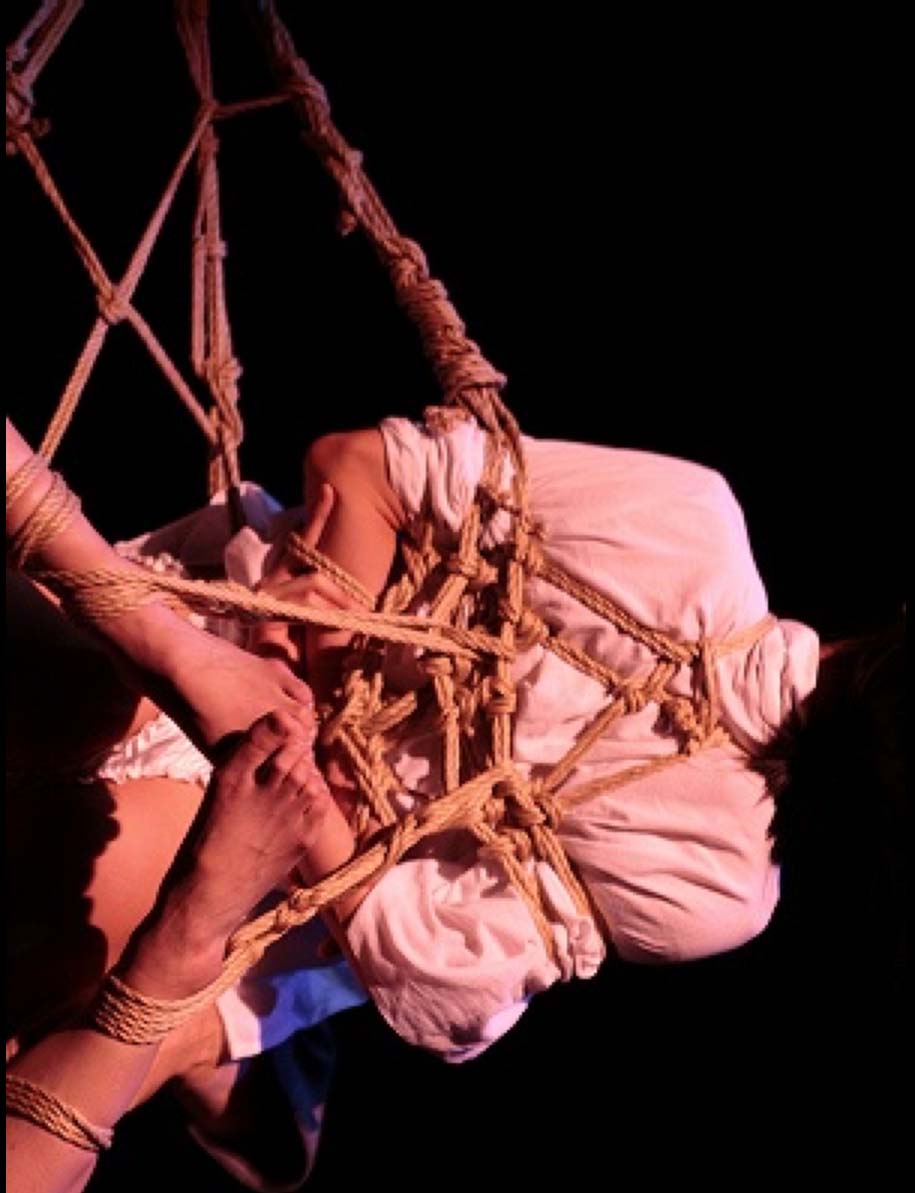
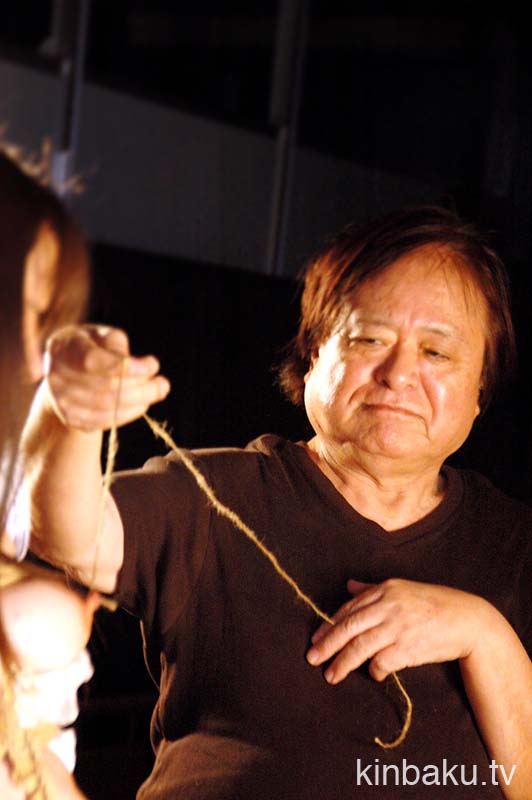
Unsurprisingly, some of these pawn shops of old are still upright today. One such shichiya, not far from the Tokyo Dome/Big Egg baseball palace and the Korakuen amusement park, is today a functioning studio for TV and movie productions. And it is exactly here where, one snowy morning, we were all to gather: Master kinbaku (緊縛) photographer Sugiura Norio (杉浦則夫), three of his assistants (including his two sons), a rope worker (縄師) going by the name Osada Steve (長田スティーブ), the model of the day, the incomparable Asagi Ageha (浅葱アゲハ), one make-up artist and yours truly.
Now, did I mention that snow was lining the streets and that, more pertinently, pawn shops from yesteryear don’t exactly have central heating? As a result, whenever there was a break of some kind everybody would swiftly huddle together around the only kerosene stove in the house.
In spite of (or perhaps due to) its lack of modern amenities, the location is still popular with those putting together kinbaku productions and can be rented for roughly $1,500/day. Indeed, the late Akechi Denki (明智伝鬼) had a certain fondness for the place, and even held one of his birthday bashes there.
Sugiura Norio is quite the traditionalist. As such, he prefers Read more »
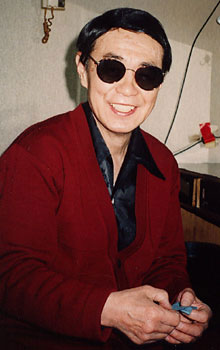
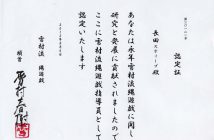
The above calligraphy by Yukimura Haruki (雪村 春樹) shows the bakushi (縛師) name Harumine (春嶺) he has bestowed on Osada Steve (長田スティーブ) — who is entering his fourth year of apprenticeship in unlocking the secrets of newaza (寝技) aka The Caressing Style.
Osada Steve:
“It is a great honor to have been accepted as a student by the undisputed King of Newaza. When I entered into this apprenticeship back in 2006, I thought this would be easy sailing as most of the Shibari is taking place on the floor. Well, I was in for a big surprise. On one hand the ties look amazingly simple, on the other hand they are very complex. Even though I am having the opportunity to apply what I am learning in the field — mostly during my regular Kinbaku Live events at Studio SIX — as a kind of “homework”, I am having a hard time catching up with what is being taught to me.
I have come to realize that the actual shibarikata (bondage patterns) only form a very small percentage of Yukimura-ryu. The essence of the Yukimura style of Kinbaku is “the way” the rope is applied — in a very calculated way, in a caressing manner to facilitate a deeply emotional connection between bakushi and model. This will not only open the opportunity for very satisfactory sessions, but will also result in those special (or shall I say unique?) facial expressions that Japanese women in rope are so famous for. All combined, at the end of the day, these are the secrets of shuuchinawa (羞恥縄) – and these techniques involve much, much more than just putting rope on a woman.
It is these concepts and techniques that are hard to teach — and consequently hard to learn. After several years of intensive study I am beginning to get a grasp of this. At the same time, I realize that I still have a lot to learn.”
Osada Steve is currently touring Europe giving workshops in Copenhagen, Berlin, and London — all sprinkled with a few performances at various venues, several video shoots, individual Shibari training, and renewing licenses for the instructors at the Osada Kinbaku Dojo Berlin.
Osada Steve will return from his 6-week tour by mid-October. For Tokyo performance and Event schedules see here: http://www.osadasteve.com/events
In the meantime we received a report from a lady fan who attended Osada Steve’s recent performance at the classy Residenz Avalon in Berlin. Here it is: Read more »
In Tokyo it is that very special time of the year between Golden Week and the rainy season where the weather is just perfect. The sun is shining, neither too hot nor too cold, no humidity in the air, crisp evenings, and all the pretty girls in mini skirts . . . So it was a good time to hit the rope trail with Osada Steve (長田スティーブ).
It all started on Sunday where we managed to get invited to Nureki Chimuo (濡木痴夢男) sensei’s re-opening of Kinbiken, the legendary rope appreciation society, that is now being revived after a 10-year hiatus.
This is the third and last in a series of a female’s perspective who again finds herself at the receiving end of attention. To stay with the theme, it could be headlined “Third Encounter of His Kindliness”, but I resist.
Before we get to fairy’s juicy report, a bit of philosophical observation seems in order: It appears that her accounts are mainly hitting the sweet spot of our female readers. It is them who can vicariously empathize with our heroine, can identify with her as she continues her journey of “beauty in suffering”.
Us guys, on the other hand, who are mainly seeing things from the top, are often preoccupied with humping and pumping, and are less inclined to “listen” into what is going on between the ears of the sub(ject). Provided, of course, you are one of them tough and super hard Doms like me.
Come to think of it, it is my biggest fear to appear soft, or worse, to eventually flip over to the other side. I have been battling this fear for years now. I’m even having nightmares about this. I can tell you, ladies, it’s a tough gig to keep the Mr Tough Guy image up. It’s a struggle.
A few days after her first encounter with Osada Steve, the girl was taken to Studio SIX.
As with her first report this was written within 12 hours of the encounter…
***
Another exhausting time on our last day in Tokyo. The streets were crowded with people rushing to their destination, signboards of various shapes and sizes were flashing away to color up the buildings… and we were hotel-less.
There I was, sitting in the hotel lobby flipping through a directory with Master as we called up Read more »
This time we are bringing you a special report sent in by a lady fan. So instead of giving you the usual fare as seen from the top, we are treating you to a female’s perspective, as she shares her thoughts and feelings at the receiving end of Osada Steve’s kindness.
This is the first of two reports of bondage sessions with Osada Steve. This encounter took place at Roppongi Jail, the second, at Studio SIX.
Grandmaster Osada Eikichi (March 15, 1925 to September 12, 2001) passed away seven years ago on September 12, 2001. Technically speaking, with Japan being the Land of the Rising Sun, this coincides with 9-11, at least for our North American fans, making it a date easy to remember.
Dubbed the Flying Rope Man by the Tokyo Journal in 1999, the legendary Osada Eikichi is generally recognized as the fastest rope artist ever.
Here’s a short interview with Osada Steve about his sensei.
TieBreaker: When and how did you first meet Osada Eikichi?
Osada Steve: I first met Osada sensei in 1998, while producing a series of Tokyo Underground features for Read more »